What Does It Mean to Be Neurodivergent?
Neurodivergent refers to individuals whose brains function in unique ways. These differences can include medical conditions, learning disabilities, or developmental variations, influencing how a person thinks, learns, communicates, and processes information. Being neurodivergent comes with both challenges and strengths.
Key Terms
Neurodivergent
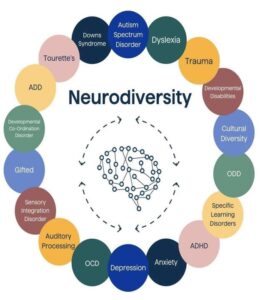 A neurodivergent person has a brain that functions differently from what is considered “typical.” This includes both neurodevelopmental and mental health conditions. Examples include:
- Autism
- ADHD
- Dyslexia
- Dyspraxia
- Tourette syndrome
- Other neurological differences
Neurotypical
Neurotypical refers to the majority of people whose brains function in ways that are culturally considered “typical.”
Neurotype
A neurotype is a particular way a brain functions. It can refer to an individual’s brain or describe how people with similar conditions may think and behave.
Neurodiversity
Neurodiversity celebrates the wide variety of human brains and the natural differences in how they function. It emphasizes that neurological differences are natural variations, not deficits.
Understanding Neurodivergence
Being neurodivergent means a person may:
- Process information differently
- Focus in unique ways
- Communicate and interact differently
These differences can affect daily life, learning, relationships, and work—but they also bring:
- Creative perspectives
- Innovative problem-solving skills
- Unique ways of thinking
Inclusion and Support
The goal of inclusion is not to “fix” neurodivergent people. Instead, it is to create environments that:
- Support diverse ways of thinking
- Value different perspectives
- Enable everyone to thrive
By understanding and embracing neurodiversity, communities can better support all individuals, recognizing both challenges and strengths.